

As we mark the 4th EU Day for the Victims of the Global Climate Crisis, many parts of Europe are hitting record temperatures. We asked European Climate Pact community members how they are finding ways to protect their communities and adapt to this increasingly extreme climate.
Honouring victims of climate change as temperatures soar
The EU Day for the Victims of the Global Climate Crisis is marked each year on 15 July: the date of one of the worst days of the deadly floods that hit Belgium and Germany in 2021.
This day honours all those who have lost their lives to the climate crisis across Europe and around the world. It’s a time to think about how we can tackle the crisis and act now to minimise its impact, reduce the risk of disasters, and better protect our lives, health and communities.
It also falls in the middle of summer: a season when we’re getting used to experiencing heatwaves, droughts and downpours. May and June 2026 have seen scorching heatwaves in Europe, with monthly temperature records smashed in countries like France, Ireland and Portugal. And soon, the weather could get even more extreme with the arrival of El Niño, an unusual warming of the Pacific Ocean that may worsen heat, droughts, floods and storms across the world.
So what should you do to prepare for this weather and adapt to these new realities? Here are three tips, with some added advice and examples from the Pact community members leading the way.
Tip #1: Be ready for extreme weather
With high temperatures and rainfall comes a risk of wildfires and floods, so it helps to know what to do in an emergency – just in case.
Our advice is to:
- follow updates and guidance from local authorities, national services and trusted sources (such as civil protection agencies, health services, and non-governmental organisations)
- check if your insurance covers floods, fires or storms
- have a basic emergency kit ready just in case (e.g. water, food supplies, torch, key documents)
Heatwaves are an increasing challenge across the continent.
It’s important to seek shade, drink plenty of water and check in on others who might need help, especially more vulnerable groups such as children, older relatives or neighbours, and homeless people.
High heat and low rainfall also make drought a possibility. In this case, check how you can save water, for example by fixing leaks, reducing your daily water use, collecting and reusing water where possible, and following local rules such as watering bans.
Italian Climate Pact Ambassadors Simone Padovani and Gianni Tartari have been exploring solutions to deal with heat with the help of the Pact’s quick-start tools.
Over 75% of the Union’s population lives in urban areas, so it’s vital that residents know how to adapt to the rising temperatures in towns and cities.
One way to help people understand and respond to these challenges is through hands-on activities like Climate Walks. Simone and Gianni recently organised walks in Padua and Venice, helping to raise awareness of the need to prepare for even hotter temperatures, especially in cities.
During the walk in Padua, participants used thermal-imaging tools to show that the temperature was 10 °C warmer in built-up streets than in sparser areas like parks. They also showed how much cooler heavily shaded spaces were.
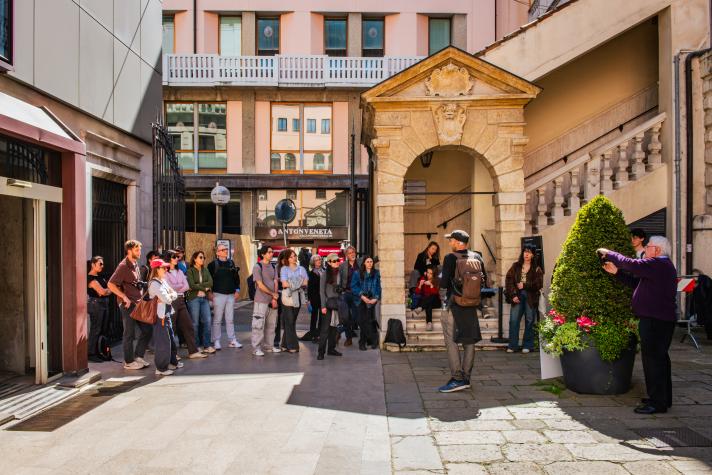
Simone and Gianni are also combining their walks with Photo Stories. At five events in Monza, locals will take photos of adaptation measures in their local neighbourhoods, then produce dynamic photo stories to show how the city has changed over time.
The point is to turn the abstract concept of an urban heat island – cities being warmer than surrounding areas, as is becoming even more extreme with climate change – into something real and visible, and to get people thinking about practical ways to deal with the heat.
As Simone explains, the idea of the walks was to make people “move from noticing a problem to proposing a response”. Participants explored “small, replicable gestures that anyone can apply” to keep their homes cooler.
These include:
- keeping blinds and curtains closed, especially during peak heat
- avoiding putting air-conditioning units in or by enclosed spaces, to avoid heat build-up
- using plants or shading to cool walls and outdoor areas
Tip #2: Make your home and community more resilient
Alongside these short-term fixes, there are ways to make your home climate-proof in the long run. These may mean investing in the short term, but long term they could save energy and water, lower your utility bills, and protect your home and health – in both summer and winter.
Examples include:
- heat pumps, a climate-friendly way to transfer heat, allowing you to warm up or cool down your home more efficiently
- good insulation, which retains heat in winter and keeps it out in summer
- effective drainage and gates or walls to protect you from flooding
- native, climate-resistant plants – by growing plants that are used to the local conditions, you can save water and energy, cool down your garden, and support biodiversity in the process
Think about how to protect yourself against energy shortages and price hikes, too:
- use energy-efficient appliances to reduce electricity use
- know your energy rights to save money and make the right choices for you
- or even join an energy community to manage your own supply
Across Europe, local governments also play a key role in making local communities more resilient to climate change, for example by greening urban areas, improving the energy efficiency of buildings, and investing in renewable energy and water management.
These kinds of solutions can also be explored during Climate Walks. This is exactly what Climate Pact Ambassador Fokke de Jong has done with the walks he has organised in Dutch cities like Amersfoort, Delft and Winterswijk.
These walks bring together groups of 25-30 citizens, researchers and policymakers to show sustainable, resilient practices in action. These practices include solar panels on the roofs of schools and communal insulation of the facades of housing.
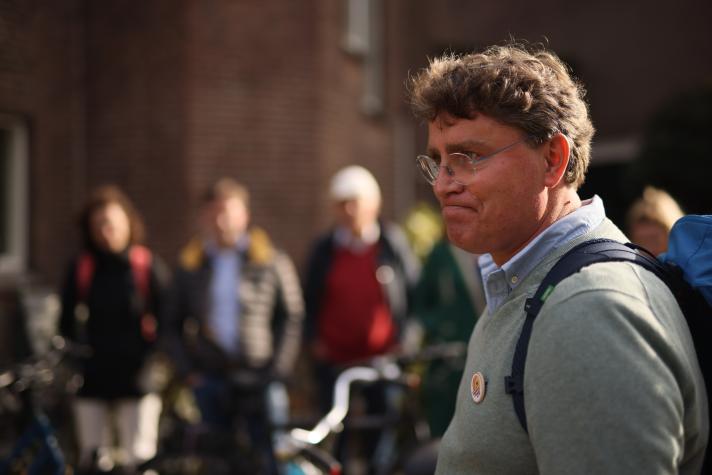
In Delft, participants also explored the Green Village Living Lab, which features innovative paving to drain rainfall and store water, futuristic energy networks using hydrogen, and buildings built from sustainable natural materials.
Fokke recommends that people try using this format to get inspired by how local communities are becoming more resilient to climate change.
“Small-scale actions can surprisingly stimulate others to do the same, accelerating a larger impact,” he explains.
“You will learn about your own neighbourhood, your community, its habits, the intrinsic motivation of others. You will learn and experience skills and knowledge you might not have expected.” Fokke de Jong, European Climate Pact Ambassador
Tip #3: Shape long-term change
While individual actions matter, many of the most effective ways to adapt happen at community level, where collective efforts can reshape neighbourhoods and cities.
You can get involved in initiatives in your community by:
- advocating for more green spaces and nature-based solutions (e.g. parks, urban trees, green roofs, community gardens) to cool cities and absorb rainfall
- engaging with your municipality or local organisations to support climate adaptation plans and investments, for example by participating in public consultations or local planning processes to ensure measures reflect community needs
- working with schools, businesses or civil society groups on local initiatives (e.g. shading, water-saving, biodiversity projects)
- speaking to others and helping raising awareness, for example using the Pact’s toolkit
Pact Ambassador Martina Weinberger leads a vibrant community of 3,500 “Climate Freskers” who are helping to shape meaningful long-term change.
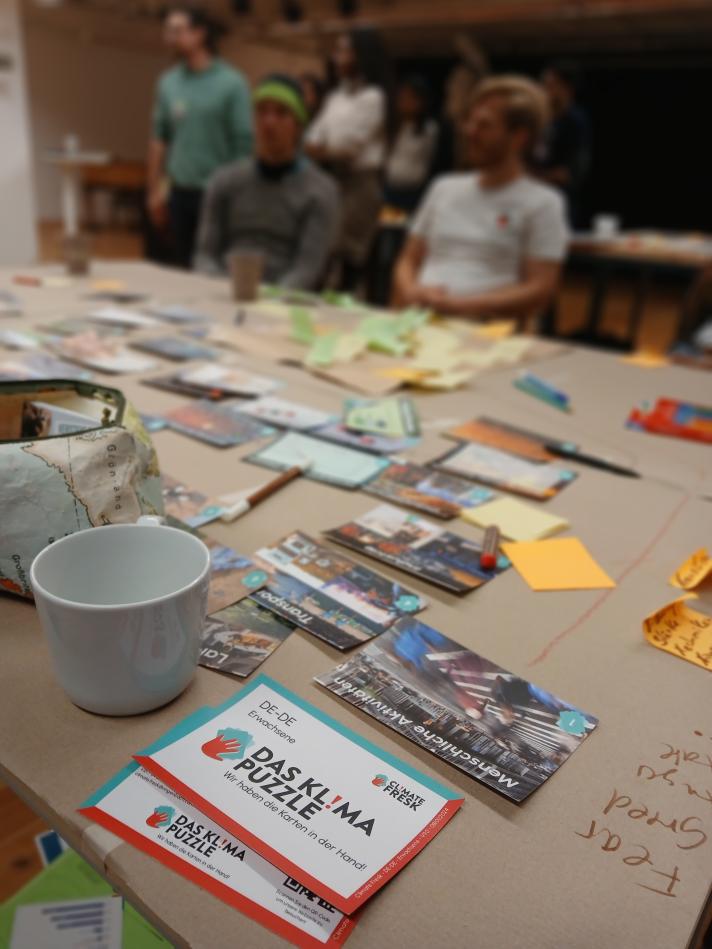
Climate Fresk is one example of a Climate Game, which Martina says “make climate action accessible, energising, and community driven”. One recent Climate Fresk event in Karlsruhe, Germany, organised with the local university, involved over 750 participants.
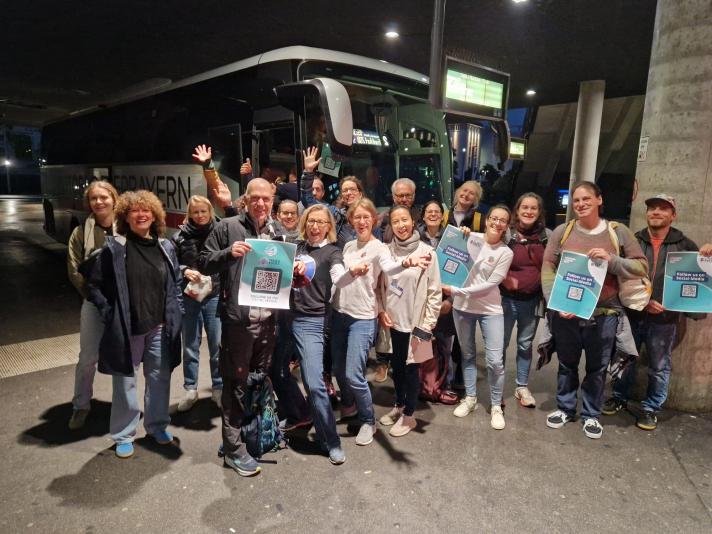
The concept is simple and practical: players identify climate challenges in their local context and turn them into small projects they can actually implement. Martina describes this as “a shift from ‘this is too big’ to ‘I can start here’”.
An example of a project born directly from this process is Blühflächen und Nisthabitate in der Maistraße, which is replacing car parks in Munich with flowering areas and nesting habitats for insects, creating a more resilient and diverse natural environment.
“The most powerful moment of Climate Fresk – every time – is watching people move from climate anxiety to genuine agency, once they understand the system as group,” Martina says.
“Participants often arrive expecting a technical lecture and leave with a sense of collective possibility. It’s a reminder that adaptation is not only about infrastructure, investment and technical solutions, but also about strengthening social cohesion and shared purpose.”
“Participants identify challenges from their own context and turn them into small, implementable projects – a shift from ‘this is too big’ to ‘I can start here’.” Martina Weinberger, European Climate Pact Ambassador
Where to get started
As we feel the effects of climate change strongly this summer, we hope these examples from the Pact community offer some guidance on how you can adapt and be more resilient.
Feeling inspired by their initiatives? Try seeing how you can put the Pact’s quick start tools into practice yourself!
You can also learn more from resources such as:
- the Pact’s resources on climate adaptation and resilience
- the EU Mission on Adaptation Portal, including its Quick Guides for Climate Adaptation, DIY Manual, and case studies
- EU-funded LIFE projects, such as LIFE CITYAdaP3, which is adapting cities to cope with climate change
- Climate-ADAPT
And keep an eye out for the EU’s new framework on climate resilience and risk management, coming later this year.
There are also many ways you can mark the EU Day for the Victims of the Global Climate Crisis, for instance by:
- Observing a moment of silence in your workplace or community
- Organising a small ceremony or an activity to bring people together for a moment of reflection
- Organising an event to raise awareness and talk about climate issues
- Following the high-level panel discussion in Brussels
- Joining commemorative events being organised by the Pact community in your country
For more ideas and guidance, check out the European Commission’s information kit.
Read more
- EU Day for the Victims of the Global Climate Crisis
- Potentially historic El Niño to come, analysis shows humanitarian toll
- Simone Padovani: European Climate Pact Ambassador
- Gianni Tartari: European Climate Pact Ambassador
- Joint Research Centre: Cities
- Quick-start tools for citizen engagement: Climate Walk
- EU cities and heat extremes
- Unlock your power
- Energy communities: What they are and why you should get involved
- Fokke de Jong: European Climate Pact Ambassador
- Green Village Living Lab
- How to talk to people about climate action
- Martina Weinberger: European Climate Pact Ambassador
- Quick-start tools for citizen engagement: Climate Game
- Blühflächen und Nisthabitate in der Maistraße
- Quick-start tools for citizen engagement: Photo Stories
- Publication date
- 29 June 2026
- Author
- Directorate-General for Climate Action