
Rethinking what’s on our plates
How much power does a school meal have to make young people and our planet healthier?
You might not think it at first, but school meals can play a meaningful role in tackling climate change. A recent EU report on school meals in Sweden showed that replacing just one regular school meal with more climate-friendly ingredients could cut 80,000 tonnes of greenhouse gases per year, if rolled out across the whole country.

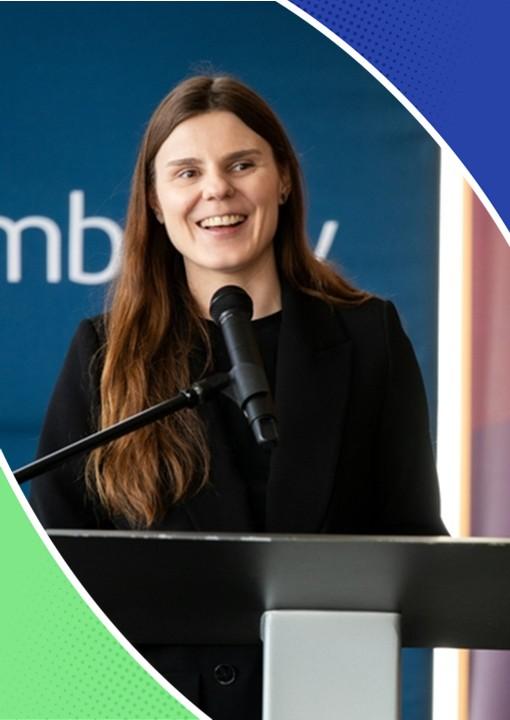
By serving meals with a better balance of plant- and animal-based foods, we can promote students’ health while reducing the environmental impact of diets high in meat. This is why we, Anna Spurek and Morgan Janowicz, Climate Pact Ambassadors from Poland, believe that food is about more than what we eat. It’s about climate resilience, young people’s wellbeing and the decisions that will define our future.
Our organisation, the Green REV Institute, founded Plant Based School: an initiative showing that what students eat in schools can be healthier, fairer and better for the planet. Plant Based School is supported by more than 60 councillors from all over Poland. The full list of supporters can be found on roslinnaszkola.pl.
“Food is about more than what we eat. It’s about climate resilience, young people’s wellbeing and the decisions that will define our future.”
Seeing the problem clearly
Every child deserves access to healthy, climate-friendly meals in schools. But when we analysed more than 1,500 school menus in Poland, the pattern was unmistakable: balanced, plant-rich options were few and far between.

In many Polish schools, meat dishes appeared on the menu nearly every day. In around two in five schools, they accounted for between 65% and 80% of all meals.
Only around 12% of schools offered a vegetarian menu and fewer than 1% included a fully plant-based option.
In some cases, it was difficult to access alternative meals, showing the need for clearer guidelines and more flexible options for students.
“Every child deserves access to healthy, climate-friendly meals in schools.”
The study also revealed a need for transparency. Only 64% of menus listed food allergens in full, and fewer than a third provided clear information about portion sizes or ingredients.
These findings revealed a gap not only in nutrition, but in inclusion – and they became the spark we needed for change.
A recipe for change
Plant Based School is proof that real change begins when data meets democracy.
The results of our study helped us bring the issue into the public eye, and we shared the evidence with Polish decision-makers.
The independent Ombudsperson for Children picked up the topic and issued a statement that clearly set out the need for healthier, more climate-friendly school meals.

Soon after, the Green REV Institute and our partners organised a roundtable at the Ombudsperson’s office, bringing together councillors, universities, activists, dietitians and non-governmental organisations. Together, we explored how every pupil can have access to food that supports both their wellbeing and the planet.
“Real change begins when data meets democracy.”
Joining the dots
What began as a national debate soon gained momentum in towns and classrooms across Poland as citizens joined the call for change.
Councillors began tabling questions and motions in their city councils calling for better nutrition standards, stronger climate education and more balanced, plant-rich menus in canteens.
National representatives supported them, recognising that healthier, more sustainable school meals can strengthen local economies and communities.
At European level, Members of the European Parliament also backed Plant Based School, recognising its relevance to school meals across Europe and its clear link to the EU’s broader climate and health ambitions.
In the end, the conversation we started about food and climate connected local action to Europe-wide climate goals.
A shared European journey
For us, this is where our role as Climate Pact Ambassadors truly matters. The Pact connects people and ideas across borders, showing that local efforts like Plant Based School are part of a shared European journey towards healthier, fairer and more sustainable food systems.
Being part of the Pact is a daily reminder that our work is not solitary, but supported by a community of values and action. It amplifies our dream of ensuring every child has access to healthy, ethical food and reflects the world we want them to inherit – one that is kinder, cleaner and more conscious.
Our efforts are further strengthened by the Green REV Institute’s involvement in the Future Food 4 Climate Coalition, financed by Poland’s National Institute of Freedom – Centre for Civil Society Development under the Civil Initiatives Fund (NEWCIF) 2021–2030.
Providing the tools to act
To turn our evidence into further action, we developed the Plant Based School Planner – a practical guide to help schools design balanced menus with more plant-rich choices.
We also launched Safe Food Magazine, where we share menu analyses, expert commentary and policy recommendations.
Together, these tools make change accessible, offering every school a way to act immediately and confidently.

Setting the table for our shared future
Across Europe, more and more people are recognising that climate action can begin in the most ordinary places – including the school canteen. Each milestone shows the same truth: when communities, young people and decision-makers sit around the same table, change becomes possible.
Plant Based School isn’t just about changing menus. It’s about transforming food systems to protect our health, our climate and the rights of future generations through knowledge, courage and solidarity.