

It’s the height of summer, and for many of us that means a chance to slow down, recharge and open a good book. But as many parts of Europe experience extreme heat, this season is also a reminder that climate change is not a distant threat – it is already affecting our lives. Whether you’re out in the sun or staying cool indoors, a good book can offer new perspectives, useful advice and reasons for hope.
European Climate Pact Ambassadors dedicate their time to supporting climate action across Europe, so we asked them to share their favourite reads on the subject, from inspiring novels to insightful non-fiction.
Read on to hear which four books they chose and why – in their own words.
Waste Wars: The Wild Afterlife of Your Trash
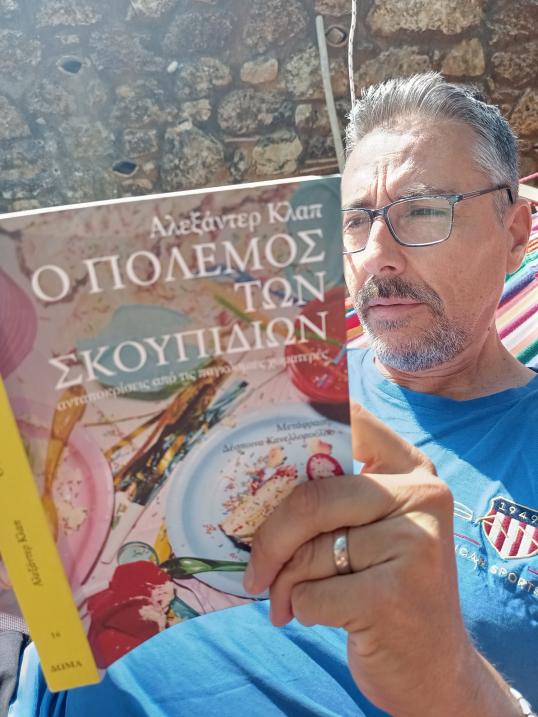
Recommended by: Athanasios Makios, Pact Ambassador for Greece
Author: Alexander Clapp
Genre: Non-fiction
Original language: English (translated into several languages, including Greek)
Best for readers interested in: Circular economy, resource management, sustainable development
Why Athanasios recommends this book:
“This book brilliantly exposes the hidden geopolitical and economic dimensions of global waste. It challenges the comforting illusion that exporting waste is the same as solving the problem.
One idea that really resonated with me is that there is no such thing as ‘away’. Our choices as consumers have impacts far beyond our borders.
For anyone working in climate action, circular economy or sustainable development, this is a powerful reminder that real solutions begin with preventing waste, designing products that last, and taking responsibility for the full life cycle of the resources we use.
My biggest takeaway from reading this book was that waste does not disappear when we throw it away. It simply changes hands, places, and often victims.”
“Waste does not disappear when we throw it away. It simply changes hands, places, and often victims.”
Pact Ambassador for Greece, Athanasios Makios
The Burning (previously published as Even if Everything Ends)
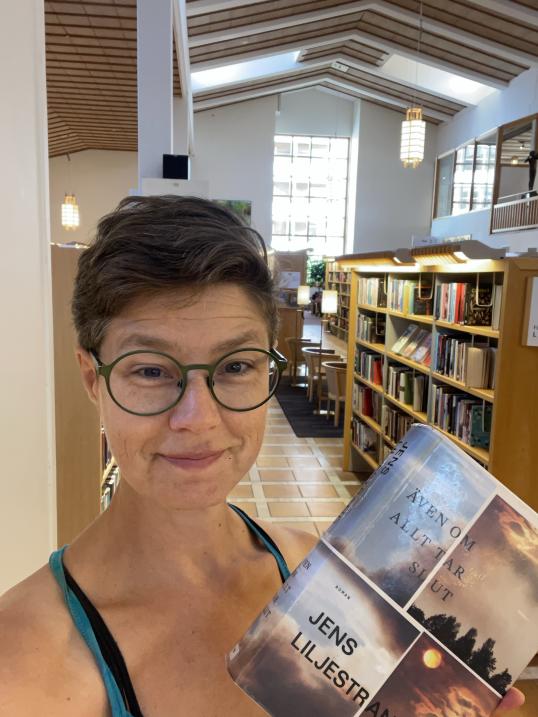
Recommended by: Lisa Skiöld, Pact Ambassador for Sweden
Author: Jens Liljestrand
Genre: Fiction
Original language: Swedish (translated into several languages, including English)
Best for readers interested in: Climate adaptation, psychology and behavioural science
Why Lisa recommends this book:
“This book lets us follow a number of people who relate to and act on the climate crisis in very different ways.
I liked the way it gives a scale for climate action, rather than a black or white picture. It also gave me a very real sense that a large wildfire could happen in my own country, Sweden.
I appreciated that it left me with several questions:
How capable is our society to manage the heat, fire and flooding crises that we’re already experiencing due to global warming? What is our response to these crises?
On an interpersonal level, we might respond better than most characters in this book. But what then is our next step? And how is it that we have such a hard time connecting the current disasters with the climate crisis, and making the changes we need?”
“On an interpersonal level, we might respond [to the climate crisis] better than most characters in this book. But what then is our next step?”
Pact Ambassador for Sweden, Lisa Skiöld
The History of Bees

Recommended by: Maria Kottari, Pact Ambassador for the Netherlands
Author: Maja Lunde
Genre: Fiction
Original language: Norwegian (translated into several languages, including English)
Best for readers interested in: Environmentalism, ecology, nature, biodiversity
Why Maria recommends this book:
“This is a beautiful novel that intertwines the lives of three characters across different centuries and continents: an English beekeeper in the 19th century, an American beekeeper facing the collapse of bee populations in the present, and a young mother in a future China where humans must hand-pollinate crops after bees have disappeared.
Through these interconnected stories, the book explores the relationship between people and nature, environmental impacts, and the lasting bonds between parents and children.
What I liked most about the novel is that it is both visionary and deeply intimate, without being apocalyptic. Rather than relying on catastrophe, it tells a profoundly human story about responsibility, loss, hope, and continuity through generations.
The three stories mirror the way climate change unfolds: slowly at first, then with consequences that speed up and transcend individual lifetimes.”
“Rather than relying on catastrophe alone, this book tells a profoundly human story about responsibility, loss, hope, and continuity through generations.”
Pact Ambassador for Netherlands, Maria Kottari
Silent Spring
Recommended by: Monika Simon, Pact Ambassador for Hungary
Author: Rachel Carson
Genre: Non-fiction
Original language: English (translated into several languages)
Best for readers interested in: Environmentalism, ecology, nature, biodiversity
Why Monika recommends this book:
“This book looks at the environmental and health damage caused by the widespread use of synthetic pesticides. It was first published in 1962, but remains a must read.
Carson shows how these chemicals move through food chains, build up in animals and humans, kill insects and birds, contaminate soil and water, and disrupt entire ecosystems. The title imagines a spring without birdsong – one where pesticide use has silenced wildlife.
This book challenged the belief that technological progress is beneficial by default. It instead argued for precaution, ecological responsibility, and stricter regulation of harmful chemicals. It became a landmark of the modern environmental movement.”
“This book challenged the belief that technological progress is beneficial by default. […] It became a landmark of the modern environmental movement.”
Pact Ambassador for Hungary, Monika Simon
Keep on reading
If these recommendations have you wanting to read more about climate change, there are many ways you can take your learning to the next level this summer.
The EU Climate Action Academy has hundreds of useful resources you can explore anywhere, anytime, from tools and guidance to reports and publications.
If you have some spare time over the summer, why not even take our online course? This includes eight self-paced modules to broaden your knowledge on a range of climate topics, from communication and youth leadership to disinformation and artificial intelligence.
And if you’re keen to go a step further, you can now secure your spot for the Academy’s live training sessions in September and October.
Details on how to attend upcoming training sessions, take the online course and explore all online resources, which can be found on the EU Climate Action Academy. Visit the page to get started today.
- Publication date
- 13 August 2026
- Author
- Directorate-General for Climate Action