
An integrated strategy combining land use planning and regenerative agriculture represents a profound paradigm shift in the management of space and resources. It means moving beyond considering agricultural areas simply as "empty" space awaiting development, or as a mere open-air food factory, to recognizing them as an active ecological infrastructure vital to the health of the entire landscape.
A regeneratively farmed field not only produces food, but also provides essential services to the entire community, which land-use planning must map, protect, and even reward.
These services include:
- Water management: Regenerated soil (rich in organic matter) works like a sponge. It absorbs much more water during heavy rainfall, reducing the risk of flooding downstream (in cities), and retains it during periods of drought.
- Carbon sequestration: Regenerative practices capture CO2 from the atmosphere and store it in the soil, helping regional climate plans achieve carbon neutrality goals.
- Biodiversity protection: Maintaining hedgerows, groves, and ecological corridors within farms connects protected natural areas, creating a continuous ecological network at the regional scale.
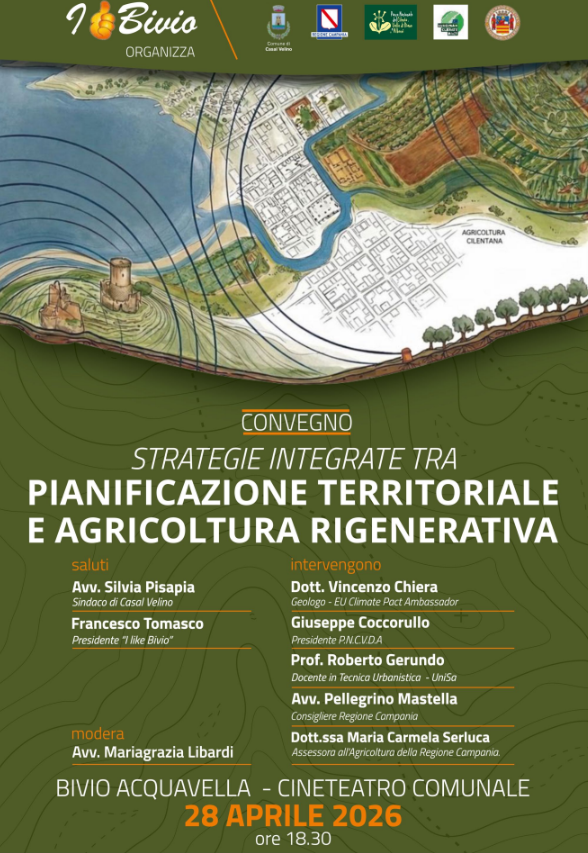
The purpose of the meeting is to provide a forum for experts and citizens to discuss the importance of managing the land in a way that minimizes environmental impact.
- water | biodiversity | sustainable development
- Thursday 7 May 2026, 18:00 - 20:00 (CEST)
- Campania, Italy
- Event type
- Satellite events
- Event format
- In person
Practical information
- When
- Thursday 7 May 2026, 18:00 - 20:00 (CEST)
- Where
- Biovio di Acquavella - Cineteatro Comunale Casal velinoCampania, Italy
- Languages
- Italian
- Organisers
- i Like bivio
- Website
- More information