
In recent years waste incineration has become a particularly relevant issue in Latvia, with several investors announcing plans to build waste incineration facilities. Waste incineration is definitely not a miracle cure for waste management, but rather the opposite - an outdated solution with risks to the environment and human health.
The European Union's waste management hierarchy also establishes a clear sequence: waste prevention first, then reuse, sorting and recycling, and only then energy extraction from non-recyclable waste. At the same time, the European Union's goal is to reduce the amount of municipal waste deposited in landfills to 10% by 2035. Supporters of the incineration approach insist that sorting alone is not enough to achieve the European goal, because of low sorting activity.
Similar arguments are also used by supporters of incineration in other parts of Europe.
But is this really the case?
Or is there a lack of a system that would help and motivate waste sorting?
How can we ensure that less and less waste ends up in landfills?
What prevents us from sorting better and more?
How and if so, would this affect waste incineration?
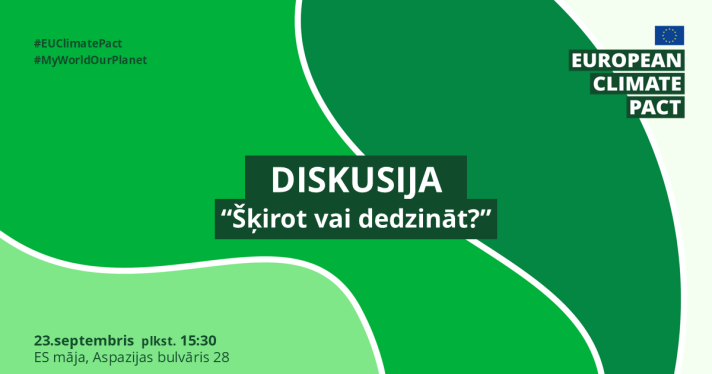
This discussion and conversation will look for answers to the above questions and draw conclusions, based on which to create a clear roadmap for decision-makers.
- adaptation to climate change | green infrastructure | environmental protection
- Wednesday 23 September 2026, 14:30 - 16:00 (CEST)
- Riga, Latvia
- Event type
- Local Pact events
- Event format
- Hybrid
Practical information
- When
- Wednesday 23 September 2026, 14:30 - 16:00 (CEST)
- Where
- RigaRiga, Latvia
- Languages
- Latvian
- Organisers
- Community-led
- Website
- More information