
The devastating realities of climate change
What if your entire life changed in the blink of an eye?
For the people in Northern Evia, Greece, this is what happened in the fateful summer of 2021.
In a flash, the region became the epicentre of one of the most devastating wildfires in the country’s recent memory. Flames tore through over 50,000 hectares of forest, farmland and villages.
But the destruction went far beyond the environment – it was deeply human, turning the lives of those in this community upside down.
Families lost their homes, their trees and, for many, their entire means of living. Centuries-old olive groves that had sustained generations were reduced to ash. Beekeeping, agriculture and forestry – all crucial to the local economy – were wiped out.
This wasn’t just a climate disaster; it was a social and economic crisis.
Restoring hope to a community in shock
But despite this, all wasn’t lost.
At We4All, a European Climate Pact Partner and environmental organisation committed to creating a greener, more resilient world, we knew we had to respond.
For me, Eva Iliadi Vagena, a team member at We4All, this was about healing ecosystems and restoring hope to a community left in shock.
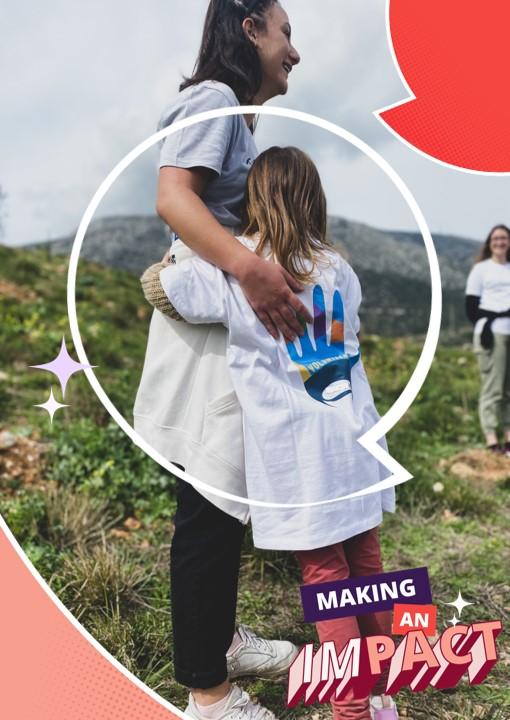
We needed to rebuild nature and livelihoods, because in a place like Northern Evia, the two are inseparable.
To tackle this urgent challenge and get on the road to recovery, our members, volunteers and partners came together with the local community. We stood with farmers who had lost everything and listened to their concerns and needs.
A bumpy road to recovery
From there, we slowly began creating a recovery plan. The key to this plan was collaboration.
We worked with municipalities, local experts, schools and foresters. Together, we began designing a long-term strategy to restore the Northern Evian environment and help the local economy to recover.
But this journey wasn’t easy.
We faced many setbacks, from degraded soil to limited funding. Bureaucratic delays slowed us down, and in some areas, the work turned out to be more complex than we’d anticipated.
Given how the wildfires had affected the local community, it was natural that there was an emotional toll, too.
Understandably, some residents – feeling sceptical and in need of support – were losing faith that recovery was even possible.
“We worked with municipalities, local experts, schools and foresters. Together, we began designing a long-term strategy to restore the Northern Evian environment and help the local economy to recover.”
Making sure impact is sustainable
The turning point came when we realised we had to adapt our approach.
Instead of just planting trees, we had to do something that would eventually provide families with sustainable income, and help them get back the lives they had lost in these fires.
So, we began planting fruit trees: olive, fig, almond, citrus.
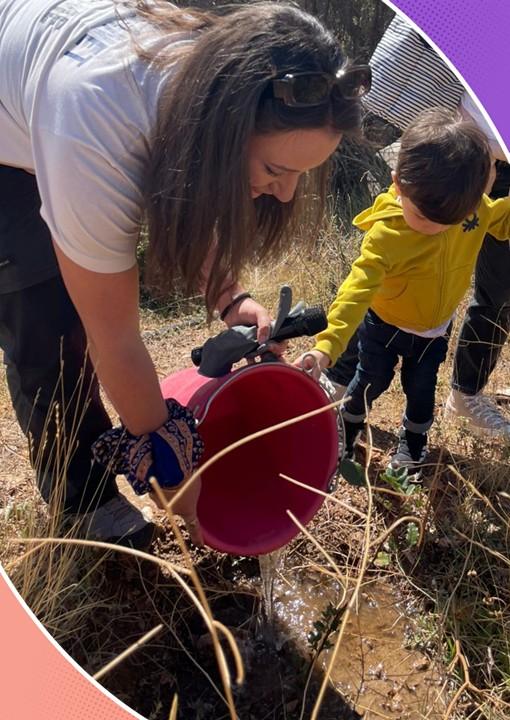
We also focused on sharing knowledge on climate adaptation, regenerative farming and land stewardship, so that the local people would not just witness our work, but become leaders in it and profit from it sustainably.
Environmental and societal benefits
That spirit of inclusion changed everything. Since then, our impact has grown significantly.
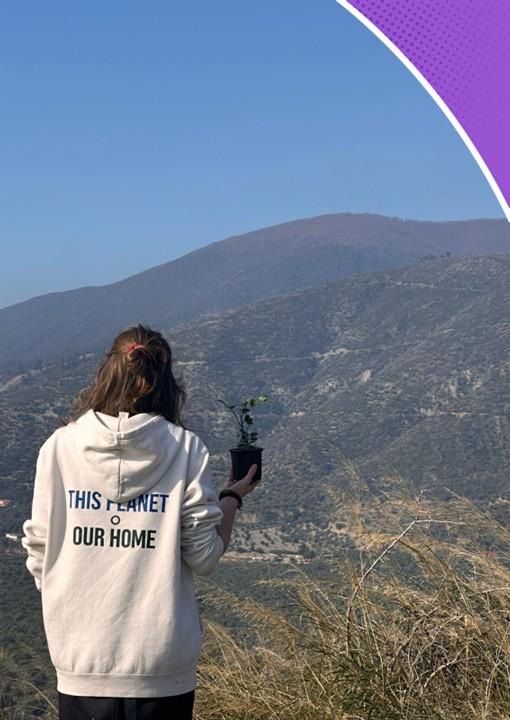
We’re already halfway to our target of replanting 160,000 trees by 2030.
Among these are more than 60,000 fruit-bearing trees, from which the produce should benefit some 3,000 local families in the long run.
Each mature tree is also expected to soak up around 22 kg of carbon dioxide and release around 117 kg of oxygen each year. Once the project is in full flow, that adds up to over 3.5 million kg of carbon dioxide absorbed and nearly 19 million kg of oxygen released annually.
We’re also seeing that soil health is improving, erosion is slowing, and vital habitats are coming back to life.
But perhaps the greatest impact has been bringing life back to communities that once felt forgotten.
We4All’s support – providing trees and connecting people to new networks – has helped dozens of families restart their farming activities.
Farmers are now harvesting again and finding new purpose through the trees they now care for.
Meanwhile, children are taking part in educational programmes, learning the value of nature and the importance of protecting it.
The power of people
So, what have we learned on this journey?
Firstly, that real climate action isn’t just about tackling greenhouse gas emissions – it's about building trust among affected people and empowering them to become part of the solution. Recovery takes time, patience and people working together with honesty and compassion.
Through the Climate Pact, we’re sharing our journey in Northern Evia and connecting with people across Europe taking action in their own communities. The Pact helps us learn from each other and strengthen the change we’re creating together on the ground.
While our efforts in Northern Evia are far from over, they stand as proof that when communities, organisations and individuals unite around a common goal, real change can happen.
We want to end on this message: the climate movement is alive, grounded in real stories and led by people who care deeply about their home, whether that’s a forest, a village or the entire planet.