
A new recipe for climate action
Have you ever wondered how our eating habits affect the climate and environment? What if the solution to a more sustainable future lies in the way we think about food?
According to the UN, food contributes to over a third of global greenhouse gas emissions. Shifting to a more sustainable food system is a huge challenge – but also a powerful opportunity for climate action. Chefs, who shape what and how we eat, remain an underused force for change.
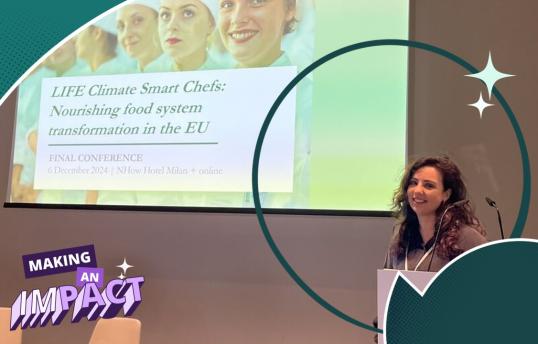
That’s why I, Laura Kirwan, an EU Climate Pact Ambassador from Ireland, am empowering them right from their kitchens!
Cooking with climate in mind
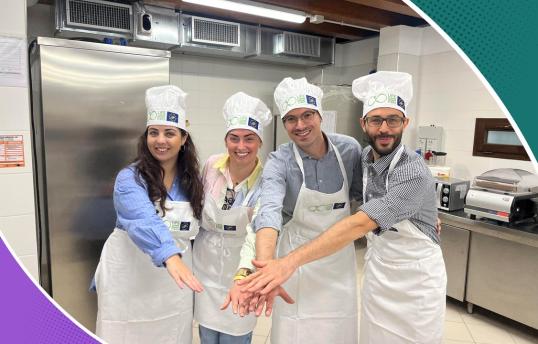
Through the Climate Smart Chef project, funded by the EU’s LIFE Programme, I work closely with culinary professionals to design menus that are friendly to the climate and environment – without compromising on taste, nutrition or profitability.
The programme has trained over 160 chefs across 27 EU countries, supported by a network of more than 1,700 associates.
“Through the Climate Smart Chef project, funded by the EU’s LIFE Programme, I work closely with culinary professionals to design menus that are friendly to the climate and environment – without compromising on taste, nutrition or profitability.”
You might be wondering, how can anyone focus on sustainability when just surviving a fast-paced kitchen is tough enough? Well, that’s where Foodprint comes in – one of my proudest accomplishments.
Foodprint is a simple digital tool that helps chefs and food-service professionals measure the environmental impact of their food. Developed by Nutritics (the food data company where I work) along with project partners, it analyses factors like carbon emissions and water use, providing sustainability scores for each ingredient, dish and menu.
For chefs, this is a game-changer. It allows them to quickly analyse menus, swap ingredients and track progress over time.
“Foodprint helps chefs and food-service professionals measure the environmental impact of their food.”
Chefs leading the change
But does it actually work? Well, the results speak for themselves.
By using the Foodprint tool to reformulate their recipes, chefs cut greenhouse gas emissions by 27% and water use by 25%.
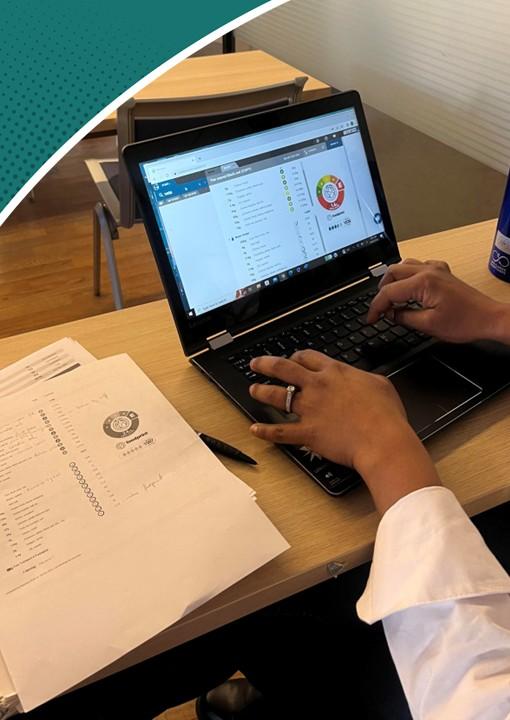
At the end of the Climate Smart Chef training, they could easily check food nutrition scores, spot allergens, measure environmental impact and design digital menus that reflect their new, more balanced approach.
Around 90% of participants said they now feel confident creating sustainable menus.
I was also incredibly excited to see several culinary professionals win the Climate Smart Chef Award, sharing their journeys with peers and helping to spread the message even further.
From the kitchen to the conference hall
Our next question was, how big could we go? Could Foodprint truly scale up and transform how the world thinks about sustainability in food?
After the training programme, Nutritics released a free, open-access version of Foodprint, empowering chefs and food professionals anywhere to design sustainable recipes.
Foodprint is now being used by contract caterers to redesign menus and reduce environmental impact. It also helps companies prove their sustainability credentials when bidding for new contracts. It has featured at major events like COP27, COP28 and COP29.
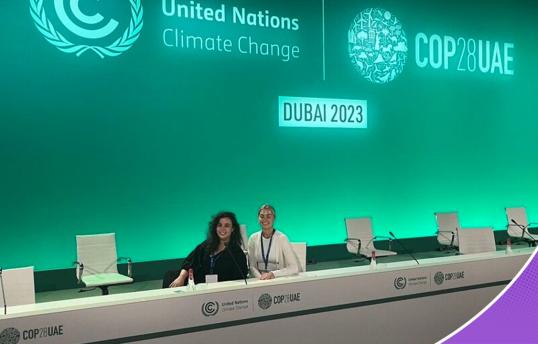
In Dubai at COP28, Foodprint was used to design the first 1.5 degree aligned menu. Nutrition, allergens and carbon emissions were included on over 260 digital menus.
It is also part of a new initiative, Climate Conscious Catering, which was launched at the event.
Using innovation to drive sustainable dining
From small kitchens to large-scale catering, chefs are proving they’re climate champions.
The Climate Smart Chef project shows that they are more than just creators of great food – they’re leaders with the power to shape how and what people eat.
With innovative tools like Foodprint, plus the right training and support, chefs can steer the direction towards a sustainable future.
As an EU Climate Pact Ambassador, my mission is to ensure every foodservice operator committed to cutting their climate impact has access to practical, data-driven solutions.
I’m now focusing on bringing sustainable cooking into hospitality and culinary education, so future chefs can serve meals that are not only tasty and healthy, but also good for the planet.
Together, we can create sustainable change across industries and borders.
“From small kitchens to large-scale catering, chefs are proving they’re climate champions.”