
Pedalling with purpose
What if your weekend bike ride gave you a glimpse into your country’s future? That was the idea behind the first Climate Classic – and the start of my climate action journey.
I’m Joost Brinkman, co-founder of Cycling4Climate and Sinkit, and a Climate Pact Ambassador from the Netherlands. Through Cycling4Climate, I organise bike rides that bring thousands of people together to raise awareness and funds for climate action. With Sinkit, a cooperative for carbon removal, I work on projects that promote true carbon responsibility.
For me, cycling is not just a sport – it’s a way to make the climate crisis visible, human and impossible to ignore. After all, as a zero-emissions mode of transport, cycling is one of the best tools to fight climate change – so why don’t we use it to raise awareness and ignite action, too?
“For me, cycling is not just a sport – it’s a way to make the climate crisis visible, human and impossible to ignore.”
Showing the realities of climate change
Cycling4Climate began in the Netherlands as a ‘not-for-profit, but-for-impact’ foundation.
In 2020, we launched the first Climate Classic. This 375 km bike ride traces the line that scientists predict will become the Netherlands’ new coastline if sea levels keep rising, highlighting the harsh reality of climate change.
Despite the challenges of the COVID-19 pandemic, we managed to bring together 50 riders for the first edition. Only one year later, that number had already grown to 600.
Today, the Climate Classic brings together almost 3,000 cyclists across multiple distances, each making a climate commitment along the way. Across all editions, more than 10,000 people have taken part.
In last year’s ride in the Netherlands, we raised €180,000 for land restoration. The Dutch Meteorological Institute even turned its headquarters into a climate festival.

From one ride to a movement
We’ve also taken the Climate Classic concept to Belgium, France, Italy, Poland, Switzerland and even Paraguay, helping to raise awareness of climate change in other parts of the world, too.
The concept is flexible: in every country, the route adapts to local landscapes and cultures. What I love most? There’s a ride for everyone, from seasoned cyclists to first-timers.

Glaciers in retreat
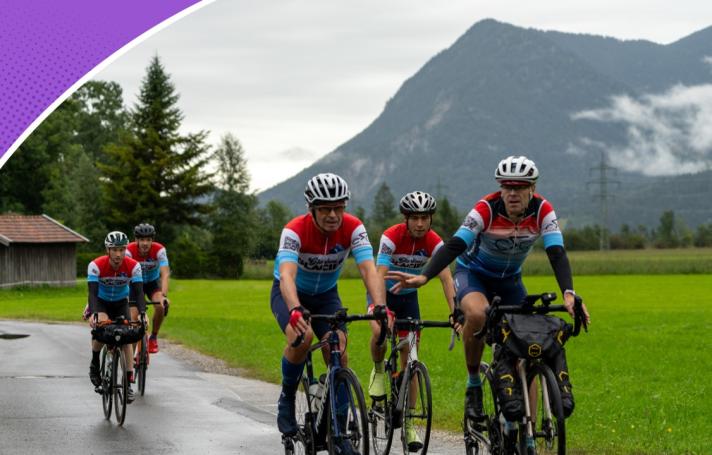
In 2025, I organised and took part in Cycling4Climate’s biggest challenge yet: the Glorious Glacier Ride, a mammoth 1,600 km cycle from Munich to Monaco, crossing the Alps and visiting some of Europe’s most breathtaking – yet fastest disappearing – glaciers, while a filmmaker documented the journey.
These Alpine glaciers have lost 40% of their volume in the past 25 years – a fact that shows how our world is changing in front of our eyes.
In Zermatt, we stopped for a Climate Fresk workshop on the Gornergrat, overlooking the glaciers. Seeing the ice retreat up close brought home the urgency of the problem. It was a powerful setting for reflection and discussion about how we can all contribute to meaningful change.
I’m sure that the cyclists who joined me on the Glorious Glacier Ride were energised by what they saw, and this will lead them to put more time and energy into fighting climate change. I’m hopeful that our followers are inspired to spread the word and take responsibility themselves, too.
Riding together for change
Being a Climate Pact Ambassador means connecting with others who share the same mission. It means leading the way – in my case, both figuratively and literally, by leading a peloton!
My role as an Ambassador is also to raise awareness of climate change, help others to understand it better, and inspire them to take action to protect our planet. Because together, we can achieve more.
The Glorious Glacier Ride was also supported by the Glaciology Department of ETH Zurich, the University of Grenoble, Climate Fresk, Apidura, myclimate, Carboneers, Škoda and Decathlon. By teaming up with these organisations, we were able to spread our message further and make an even bigger impact.
As Cycling4Climate grows, more cyclists, more volunteers and more communities are joining our journey. In the end, it’s not about the kilometres we cover – it’s about the connections, the energy, and the action that comes after.
“In the end, it’s not about the kilometres we cover – it’s about the connections, the energy, and the action that comes after.”