

The European Climate Pact is connecting with schools and universities across the EU to empower young people and involve them in meaningful climate action. As the new academic year gets into full swing, these activities are finding creative ways to inspire the next generation. Discover how education is turning ideas into action and how you can play your part!
Education is crucial for ensuring today’s youth become tomorrow’s leaders and decision-makers, shaping how Europe fights and responds to climate change.
This is the idea behind Pact2School, an initiative of the European Climate Pact bringing schools and universities together with Pact Ambassadors and Partners through awareness-raising sessions and practical student-led activities.
Let’s take a look at four inspiring examples from the many activities organised by the Climate Pact Community across Europe, with words from the Pact Ambassadors who have made them happen.
Learning through creativity
How do you make climate-related topics memorable for eight and nine-year-olds? In Portugal, the answer was superheroes.
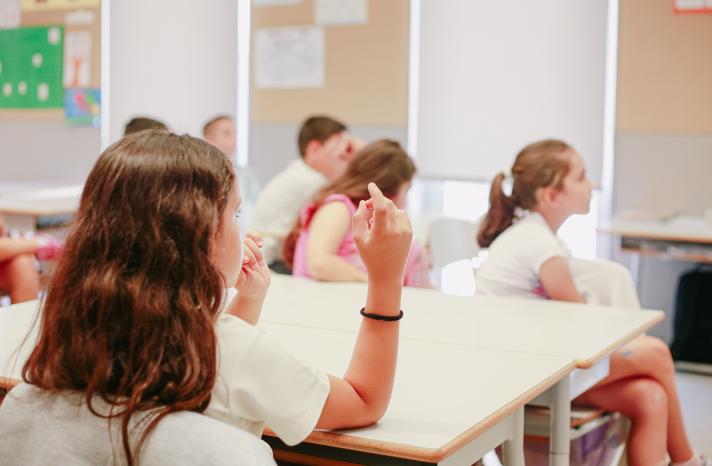
In an educational workshop led by Pact Ambassador Ana Milhazes (pictured above), more than 20 primary school pupils at Escola Básica de Rates in Póvoa de Varzim explored plastic pollution, food waste, biodiversity and the circular economy as part of the Zero Waste Guardians activity.
The pupils worked in groups to create their own climate-themed superheroes, each with a mission to save the planet. The workshop was also practical, as pupils learned how to use compost bins to reduce food waste.
‘They created their own Zero Waste Guardians using materials they had collected and developed a story around how their characters could help protect the planet – combining storytelling, teamwork and climate action in a very hands-on way,’ Ana says.
‘I loved seeing the students turn the concepts we explored during the session into something tangible and creative.’
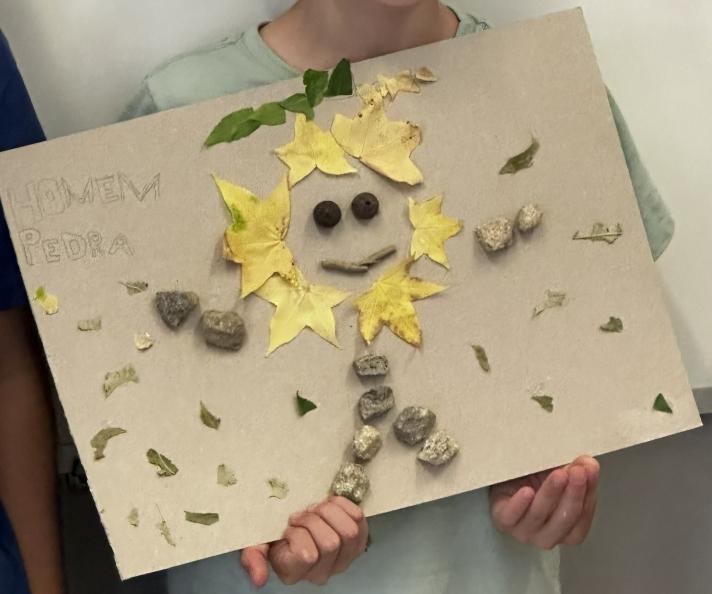
‘They were also clearly familiar with environmental concepts, which I believe reflects the work their school and teachers are already doing to integrate environmental awareness into their learning, while creating an environment where young people feel encouraged to participate, express their ideas and feel heard,’ she adds.
Zero Waste Guardians teaches us how creativity can make climate topics fun and relatable. Its creations will also remain in the classroom to inspire future year groups, ensuring the initiative has a lasting impact.
Ana’s advice for others looking to teach the leaders of tomorrow?
‘Listen to young people and meet them where they are. They need to feel seen and heard, and educators need to be environmentally literate and lead by example – because our actions will always speak louder than our words.’
‘I loved seeing the students turn the concepts we explored during the session into something tangible and creative.’
Ana Milhazes, Pact Ambassador for Portugal
Learning through student-led action
At IES Joan Miró secondary school in Spain, 25 students were encouraged not just to learn about climate action, but to design it themselves.
Through Planetaula, supported by Climate Pact Ambassador David Sánchez, students explored climate mitigation, adaptation and the circular economy before developing practical ideas for their school community.
One of those ideas turned into a market where pupils can swap unwanted items to avoid waste and give them a second life.
‘The ideas were not proposed by teachers or by a climate leader, but by the pupils,’ David explains.
‘I realised how easy it is to make pupils’ minds work together when they have a shared goal and the opportunity to make a real, tangible and positive impact in their school.’
‘Impactful changes in education require time and only succeed when they are embedded in the culture of the school,’ he adds.
Planetaula shows what can happen when young people are given ownership and trusted to develop solutions themselves. A permanent ‘Planet Team’, will also ensure pupils continue their roles as climate leaders.
‘I realised how easy it is to make pupils’ minds work together when they have a shared goal.’
David Sánchez, Pact Ambassador for Spain
Learning through nature
When it comes to climate education, sometimes the best classroom is not within the school building, but outside in the natural environment.
This was the idea behind Our School Garden as a Climate Island, an initiative supported by Pact Ambassador Wolfgang Schwarz in Germany to help students learn about biodiversity and climate adaptation.
‘If pupils learn early how to think outside the box, they can take the initiative to launch brilliant, socially relevant projects on their own.’
Wolfgang Schwarz, Pact Ambassador for Germany
Responding to the demolition of the Wilmersdorf ‘climate island’ – a local oasis – around 20 young pupils at Berlin’s Ernst-Habermann-Grundschule created a new green space.
They then added in raised beds, greenery and a herb spiral to assess how plants can provide shade to help communities adapt to rising temperatures.
‘I was impressed by the ideas put forward by the Year 3 pupils,’ Wolfgang reflects.
‘I was amazed by how innovatively and quickly they had transformed a derelict school playground into a flourishing, shaded “climate island”.’
‘If pupils learn early how to think outside the box, they can take the initiative to launch brilliant, socially relevant projects on their own,’ he adds.
While such initiatives show the value of using local outdoor spaces to teach young people about climate change, Wolfgang notes that they rely on collaboration and teamwork.
He recommends that teachers look for allies to support the initiative, from the school management and caretaker to parents and others in the local community.
Learning through science
‘Teachers, hand over control to your students and commit to real learning […] Don't aim for perfection; aim for action.’
Pepe Torres, Pact Ambassador for Spain
For some young people, climate change can feel abstract. But at CEIP Antonio Machado primary school in southern Spain, one activity has shown how science can make climate issues feel real and relevant to young people.
Supported by Pact Ambassador Pepe Torres, the project ‘Understanding the Weather, the CLIMATE and ACTING on It!’ involves pupils collecting and analysing data from a school weather station.
Pepe says this makes for a ‘spectacular learning experience’, as pupils discover the impacts of climate change for themselves while developing scientific skills.
‘Our weather station at Antonio Machado primary school shows that local action and data inspire communities. The success stemmed from applying science to our surroundings.’
More than 150 students have taken part in the initiative, which has also attracted extensive media attention and European recognition through Climate Education Day 2025, helping share its approach with a much wider audience.
Like the other Ambassadors, Pepe was impressed by how pupils took to the challenge and feels it’s crucial they are encouraged to develop into future climate leaders.
‘Teachers, hand over control to your students and commit to real learning,’ Pepe says.
‘Don't aim for perfection; aim for action. Your most important role is to instil confidence and create the space for young people to take the lead.’
More inspiration from across Europe
These projects are just a small sample of the activities taking place through Pact2School.
In the first phase in late 2025 and early 2026, 112 educational sessions were organised in 22 EU countries, ranging from interactive workshops and presentations to talks and games.
After connecting with schools and universities to organise these initial sessions, Pact Community members had the opportunity to win a €1,000 prize via the Pact2School Challenge.
Across Europe, 46 primary schools, secondary schools and universities took part. 15 applicants were then selected to receive funding for student-led activities, including the four featured in this article.
They are now working with the Pact Community on topics from sustainable food, waste and pollution to biodiversity, adaptation, and even the environmental impact of menstrual products.
Together, these activities are giving young people the knowledge, skills and confidence to become the climate leaders of tomorrow.
To discover more, visit the Pact2School webpage.
Interested in starting an educational project?
If you work with a school or university and would like to get involved in Pact2School, the initiative is currently accepting applications until 9 October 2026. The next application window will then close on 15 January 2027.
If you’re interested, you will need to be supported by a Pact Ambassador or Partner, so check out our Interactive Pact Map to connect with those in your area. You can then explore the possibility of taking part together.
For more information, you’re also welcome to engagement euclimatepact [dot] eu (email the Pact).
Want more ideas on how to engage young people in your community? Check out the Pact’s quick-start tools.
- Publication date
- 25 September 2026
- Author
- Directorate-General for Climate Action