

As part of the 2025 European Week of Regions and Cities, the Climate Pact community co-organised local events to talk about how we can adapt to the new challenges posed by climate change, prepare for crises, and remain resilient.
Over 700 people joined European Climate Pact events in Croatia, Estonia, Greece, Poland, Romania and Slovenia to discuss how local communities and citizens in EU cities and regions can work together to build a more sustainable future.
Let’s take a look at some of the themes and outcomes.
Making cities more resilient
One of the main topics across the series was resilience – in other words, how we prepare for and bounce back from the problems caused by climate change.
In Athens, Greece, over 400 participants, including 17 Pact Ambassadors, were present to discuss strategies that could be used by other cities and regions in Greece and beyond. These ranged from making sure institutions are well prepared for crises to using science and data to help predict extreme weather events.
Governor Nikos Hardalias gave several practical examples from the Attica Region, which includes the Greek capital Athens, including its civil protection plan to prevent and manage natural disasters, over 50 flood protection projects covering high-risk areas, and new green spaces such as the Aenaon Metropolitan Park, a massive regeneration project that revitalises the capital’s coastal area.
“In Attica, we prove through concrete action that protecting people and the environment is a top priority. With meaningful projects, cooperation, and determination, we are building a region that is safer, greener, and more sustainable. Because tomorrow will not wait for us, we must create it, together, today: governments, regions, municipalities, and civil society.”
Nikos Hardalias, Governor of the Attica Region
These are all examples of proactive approaches to resilience.
As Pact Ambassador and host Kostas Bakoyannis noted, resilience shouldn’t just be about reacting to difficult situations, but preparing in a way that takes back control. It’s also about building a culture of cooperation and trust before the next crisis hits.
The event in Łódź, Poland, organised by Pact Ambassador Hanna Zdanowska, also focused on making the future more sustainable – but this time, in relation to an important local industry: clothing.
More than 300 people joined the event to explore how the industry can reduce waste and use more sustainable materials. These more efficient practices will not only tackle climate change, but also help transform the local industry to become future-proof, economically resilient and competitive. It included an exhibition of relevant trends and innovative textiles, giving participants real examples to take inspiration from.
One of its main conclusions was that resilience isn’t just about infrastructure. It’s about communities anticipating change before it comes, and working together to turn challenges into solutions.
Adapting to new realities
At an event in Rakvere, Estonia, hosted by Pact Ambassador Andres Jaadla, around 80 people joined a discussion on the upcoming European framework for climate resilience, announced by Commission President Ursula von der Leyen last year.
Presentations helped paint a picture of local resilience and adaptation systems, showing that most municipalities tend to develop their strategies individually. Given that climate challenges know no borders, attendees agreed to work together more closely, share information and prioritise preparedness.
This topic was also discussed in Maribor, Slovenia, where local authorities talked about setting up an alliance of communities to work together on adapting Slovenia’s Podravje region to climate change. Hosted by Pact Ambassador Vlasta Krmelj, the event also looked at how municipalities can get citizens more involved.
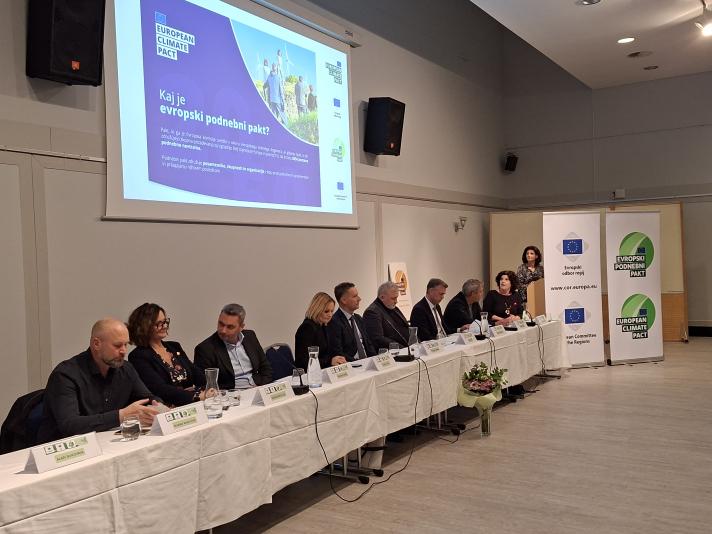
“The fight against climate change must bring together all stakeholders – councillors, municipalities, businesses and citizens – who are involved in activities from the outset,” said Gregor Macedoni of the European Committee of the Regions.
The vital role of water
Collaboration was also a theme in Miercurea Ciuc, Romania, where over 60 people – including four Pact Ambassadors and high-level representatives – explored the creation of a regional ‘pact’. This would focus specifically on managing water in Romania’s mountainous Ciuc Basin region.
Why water? Well, as Kata Tüttő, President of the European Committee of the Regions, told the audience:
“Water is a key issue for all European regions. Mountains are gradually losing their role as water reservoirs, and this has direct consequences for communities and ecosystems. That is why it is essential that regions and local authorities are involved in European decisions on water resource management and adaptation to climate change.”
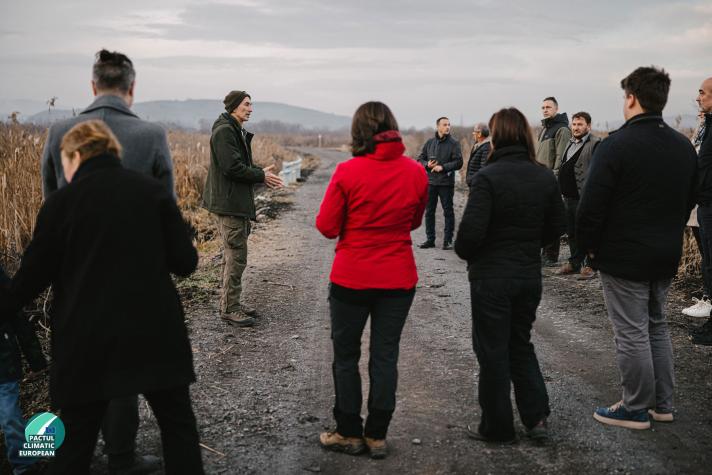
This event in Romania involved a study visit to a local road that has been modernised to retain water in the area. These works also protected the dams of the local beaver population – a great example of how such measures should also protect nature.
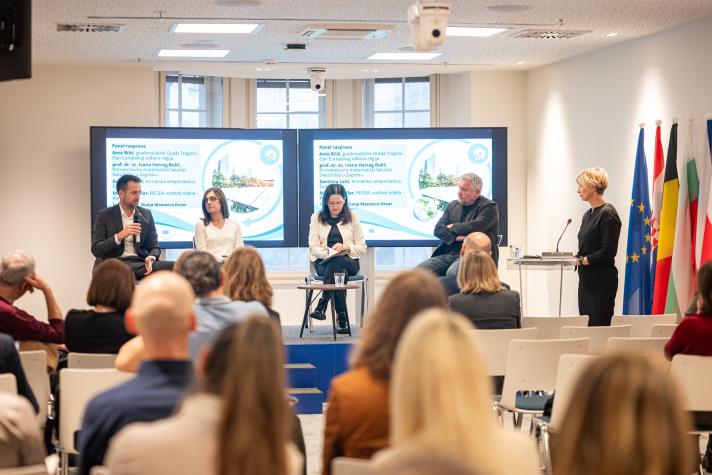
Water was also a hot topic in Zagreb, Croatia, where around 50 participants talked about adaptation to extreme weather conditions such as heavy rain, strong storms and rising sea levels.
Ante Bilić, Mayor of the City of Trogir, explained how this historic coastal city is being threatened by rising sea levels and ever-more frequent storms. To deal with this, the city is having to develop projects that protect both climate resilience and cultural heritage.
He stressed the key role of cities in launching adaptation initiatives and projects. Local communities bear the brunt of climate extremes every day, he said, making them the first line of defence but also an important engine for transition.
Attendees agreed to establish a regular Zagreb Climate Forum to keep up the discussions on adaptation strategies.
What we learned from the series
In the spirit of EURegionsWeek, these events helped local communities start important conversations about how they adapt and prepare for a sustainable future.
Across the series, a few key lessons stood out:
- As the effects of climate change become clearer and more extreme, resilience, adaptation and preparedness become even more important.
- Many European cities and regions are already leaders in this field, showing how they are adapting to climate change, preparing for crises, and staying strong in the face of challenges like extreme weather.
- Being resilient is not just about having the right infrastructure in place or being able to recover from setbacks. It means being proactive and finding a way forward that turns the challenges of climate change into solutions that build a better future.
- Climate challenges are complex, which means collaboration – across communities as well as between different groups within communities – is crucial.
- As COP30 also showed us recently, we need to remember to make the link between fighting climate change and protecting nature.
For a deeper overview of the Shaping Tomorrow event series, explore the consolidated national summaries here.
As we near the end of the year, we’d like to thank all those involved in this inspiring series and other European Climate Pact activities throughout 2025. The events reflected the spirit of the Pact: connecting people through a shared mission, and finding ways to turn climate goals into real change on the ground.
The European Commission is inviting citizens, businesses, regional authorities, and all stakeholders to take part in a new public consultation on climate resilience. This is a unique chance to influence the EU’s future policies and determine how Europe prepares for and responds to climate change. Read more and reply to the survey by 23 February 2026:
Have your say: Shape Europe’s future in a world affected by climate change - Climate Action
Want to get inspired and see what climate action is happening near you? Check out our new Interactive Pact Map. Make sure you also keep an eye on our Climate Pact Going Local Talks page for more events like these near you in 2026!
- Publication date
- 17 December 2025
- Author
- Directorate-General for Climate Action