
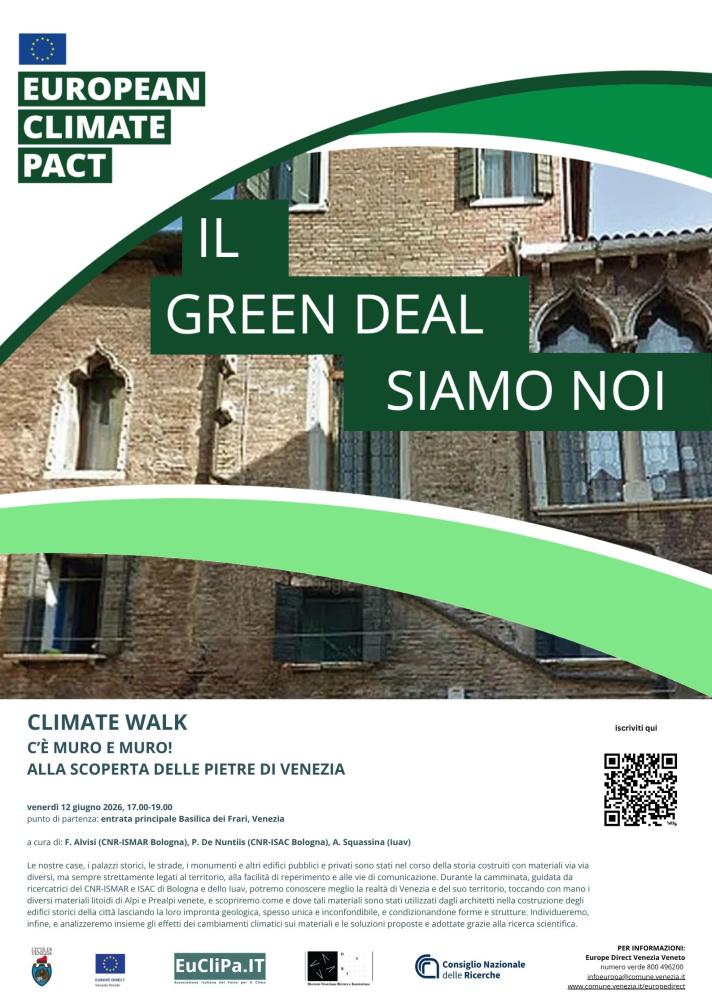
Our homes, historic buildings, streets, monuments, and other public and private structures have been built over the course of history using a variety of materials, all of which have been closely tied to the local area, local availability, and transportation routes.
The availability of these materials - first in nature and later on the market - along with their technical characteristics, has always shaped the architectural style and urban planning choices of our towns and cities. On this walk through the city streets, you’ll gain a deeper understanding of Venice and its surrounding area, getting hands-on experience with the various lithic materials from the Venetian Alps and Prealps, learning to recognize their technical characteristics and geological origins - often linked to the sea - and to distinguish them from those sourced from farther afield.
Furthermore, you will discover how and where these materials were used by architects in the construction of the city’s historic buildings, leaving their geological imprint - often unique and unmistakable - and shaping their forms and structures. You will also discover the various forms of deterioration affecting the built heritage, specific to the different materials used in both historic-artistic and private buildings.
Finally, we will identify and analyze together the effects of climate change and the solutions proposed and adopted thanks to scientific research.
- adaptation to climate change | cultural heritage
- Friday 12 June 2026, 17:00 - 19:00 (CEST)
- Venice, Italy
- Event type
- Satellite events
- Event format
- In person
Practical information
- When
- Friday 12 June 2026, 17:00 - 19:00 (CEST)
- Where
- VeniceVenice, Italy
- Languages
- Italian
- Organisers
- DVRI - Venetian District of Research and Innovation
- Website
- More information